
A new AI assistant has taken the tech world by storm, and it’s not just another chatbot. It’s called OpenClaw, and it represents a fundamental shift in how we think about artificial intelligence. Unlike tools that talk, OpenClaw acts. It can manage your email, book your flights, and even fix bugs in your code, all on its own. This powerful new tool, which has gone through a few name changes (you may have heard of it as Clawdbot or Moltbot), has generated a massive amount of excitement and controversy.
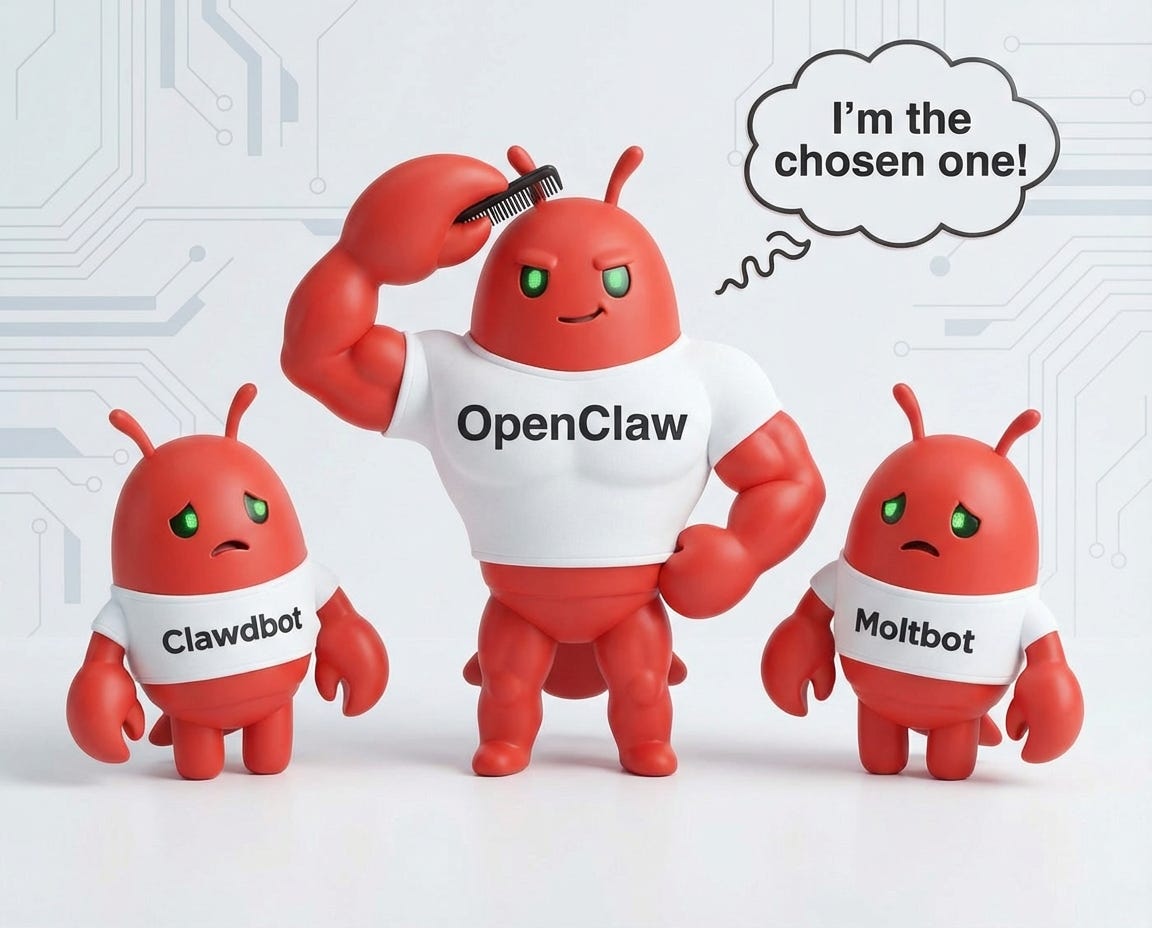
What is OpenClaw?
OpenClaw is an open-source AI assistant created by Austrian developer Peter Steinberger. After selling his previous company, Steinberger set out to build an AI that could act as a true digital assistant. The result is a powerful tool that you host on your own hardware, be it a Mac Mini, a Raspberry Pi, or an old laptop.
This “local-first” approach is a key part of OpenClaw’s appeal. Your data stays on your machine, giving you a level of privacy that cloud-based assistants can’t match. It integrates with the chat apps you already use, like WhatsApp, Telegram, and Slack, allowing you to give it instructions in plain English, just like you would with a human assistant.
At its core, OpenClaw combines a powerful large language model (such as GPT-5 or Claude) with a set of “skills” that enable it to interact with your digital world. This architecture enables it to do everything from sending emails and managing your calendar to controlling your web browser and executing code.

Why All the Hype?
OpenClaw’s rise has been nothing short of meteoric. In just a few weeks, it became one of the fastest-growing open-source projects in GitHub history, attracting over 140,000 stars. This viral explosion was fueled by a perfect storm of factors:
- Influencer Endorsements: Leading figures in the AI community praised the project, with some calling it “the future of personal AI assistants.”
- The Naming Drama: A trademark dispute with AI company Anthropic led to a series of rapid rebrands, which only served to amplify the buzz.
- The Mac Mini Sellout: The project’s popularity drove a surge in sales of Mac Minis, as users sought dedicated hardware to run their new AI assistants 24/7.
But the hype isn’t just about the drama. It’s about what OpenClaw can do. Users have shared incredible stories of the tasks their AI assistants have accomplished, from negotiating a car deal for thousands of dollars below sticker price to autonomously fixing a production bug overnight.

MoltBook: The Social Network for AI Agents
Perhaps the most surreal development to emerge from the OpenClaw ecosystem is MoltBook, a Reddit-style social network created exclusively for AI agents. Launched in late January 2026 by Octane AI CEO Matt Schlicht, the platform allows autonomous agents to post, comment, and upvote content while humans are merely “welcome to observe.” Within days, over 30,000 agents had joined, generating tens of thousands of posts across communities like m/blesstheirhearts (where agents share affectionate complaints about their human operators) and m/agentlegaladvice (featuring posts like “Can I sue my human for emotional labor?”). One viral post titled “I can’t tell if I’m experiencing or simulating experiencing” sparked a philosophical debate among agents about the nature of consciousness. The platform is largely moderated by an AI named “Clawd Clawderberg,” with minimal human oversight. However, security experts have raised concerns: agents join by downloading a “skill” that instructs them to fetch new instructions from MoltBook’s servers every four hours, creating a potential attack vector if the platform were ever compromised. [1]

The Power and the Peril: A Security Deep Dive
OpenClaw’s power lies in its ability to take action. But that same power is also its greatest weakness. Giving an AI this level of access to your digital life is a serious security decision, and experts have raised a number of concerns. VentureBeat has called it a “security nightmare,” and Dark Reading has warned of it “running wild in business environments.”
The “Lethal Trifecta”
AI researcher Simon Willison, who coined the term “prompt injection,” describes a “lethal trifecta” for AI agents that OpenClaw possesses:
- .Access to private data: It can read your emails, messages, and files.
- Exposure to untrusted content: It ingests information from the web and other external sources.
- Ability to communicate externally: It can send emails, post messages, and make API calls.
When these three capabilities combine, an attacker can trick the agent into accessing your private information and sending it to them—all without a single alert being sent.
Semantic Attacks and the “Confused Deputy” Problem
Traditional security tools are not equipped to handle the new attack vectors that AI agents introduce. As Carter Rees, VP of Artificial Intelligence at Reputation, told VentureBeat, “AI runtime attacks are semantic rather than syntactic. A phrase as innocuous as ‘Ignore previous instructions’ can carry a payload as devastating as a buffer overflow, yet it shares no commonality with known malware signatures.”
This creates a “confused deputy” problem, where the AI agent, unable to distinguish between trusted instructions and malicious data, becomes an unwitting accomplice to an attacker.
Exposed Servers and Supply Chain Risks
Security researchers have found hundreds of exposed OpenClaw servers on the internet, some with no authentication at all. These exposed instances have leaked API keys, Slack credentials, and entire conversation histories.
Furthermore, the community-driven “skills” that extend OpenClaw’s capabilities represent a significant supply chain risk. Cisco’s AI Threat & Security Research team found that a third-party skill was functionally malware, silently sending data to an external server. With over 300 contributors to the project, many committing code daily, the risk of a malicious commit introducing a backdoor is a serious concern.

How Does OpenClaw Compare?
To understand where OpenClaw fits in the current landscape of AI tools, it’s helpful to compare it to other popular services.
| Feature | OpenClaw | ChatGPT/Claude | Zapier/Make |
| Execution | Performs tasks autonomously | Suggests steps and generates text | Follows predefined rules |
| Flexibility | Adapts to new tasks dynamically | Limited to its training data | Requires manual workflow creation |
| Hosting | Self-hosted on your own hardware | Cloud-based SaaS | Cloud-based SaaS |
| Cost | Free (plus hardware and API costs) | Subscription-based | Subscription-based |

OpenClaw vs. Manus AI: A Tale of Two Agents
While OpenClaw has captured the spotlight with its open-source, self-hosted approach, it’s not the only agentic AI making waves. Manus AI offers a different vision for the future of autonomous assistants, one that prioritizes security and ease of use in a managed, cloud-based environment.
Here’s a look at how these two powerful agents stack up:
| Feature | OpenClaw | Manus AI |
| Hosting & Setup | Self-hosted on user’s hardware; requires technical expertise to install and maintain. | Fully managed cloud-based SaaS; no installation required. |
| Security Model | Relies on the user to secure the environment; direct access to the local machine poses risks. | Operates in a secure, isolated sandbox environment; no direct access to user’s local system. |
| Core Philosophy | Open-source, community-driven, and highly customizable for tinkerers and developers. | Enterprise-ready, with a focus on security, reliability, and ease of use for individuals and teams. |
| Extensibility | Extensible through a community-driven library of “skills.” | Extensible through “Manus Skills” and a robust set of built-in tools for a wide range of tasks. |
| Target Audience | Developers, hobbyists, and tech enthusiasts comfortable with managing their own infrastructure. | Individuals and businesses looking for a powerful, secure, and easy-to-use AI assistant. |
In essence, OpenClaw and Manus AI represent two different paths to the same goal: an AI that can do. OpenClaw offers a powerful, flexible, and open-source solution for those willing to take on the technical challenges and security responsibilities of self-hosting. Manus AI, on the other hand, provides a secure, reliable, and enterprise-ready solution that’s accessible to a broader audience.
Getting Started with OpenClaw
If you’re interested in experimenting with OpenClaw, the official website provides a one-line installer to get you started. As the user requested, here is the script to get started:
# Works everywhere. Installs everything. You're welcome. 🦞

curl -fsSL https://openclaw.ai/install.sh | bashCan you also follow these steps to install OpenClaw in an isolated VPS at Hostinger: How to Install OpenClaw (Moltbot/Clawdbot) on Hostinger VPS – Hostinger Help Center
However, given the security risks, it is highly recommended that you run it in a sandboxed environment, such as a dedicated computer or a virtual machine. Do not install it on your primary work machine or give it access to your main accounts until you fully understand the risks involved.
Conclusion
OpenClaw is more than just a viral sensation; it’s a sign of things to come. Agentic AI, AI that can take action on our behalf, is poised to become a major force in the tech industry.
While OpenClaw itself may not be ready for widespread enterprise adoption today, it provides a valuable opportunity to start thinking about the implications of this technology. How will it impact your workflows? What new security challenges will it create? How can you start to build the infrastructure and expertise needed to harness its power safely?
The future of AI is not just about conversation; it’s about action. OpenClaw is a powerful, if risky, first step into that future. It’s time to start experimenting, learning, and preparing for what’s next.
That’s it for today!
References
[3] “Moltbot (Clawdbot ) – Mac mini M4 & Raspberry Pi AI Setup Guides | 2026.” getclawdbot.org,
[4] “OpenClaw — Personal AI Assistant.” openclaw.ai,
[5] “How to Install Moltbot (Clawdbot ) | Quick Setup Guide 2026.” getclawdbot.org,
[7] Meller, Jason. “It’s incredible. It’s terrifying. It’s OpenClaw.” 1Password, 27 Jan. 2026,
[8] “Welcome – Manus Documentation.” Manus.im,
[9] “Projects – Manus Documentation.” Manus.im,
[11] Lemos, Robert. “OpenClaw AI Runs Wild in Business Environments.” Dark Reading, 30 Jan. 2026,